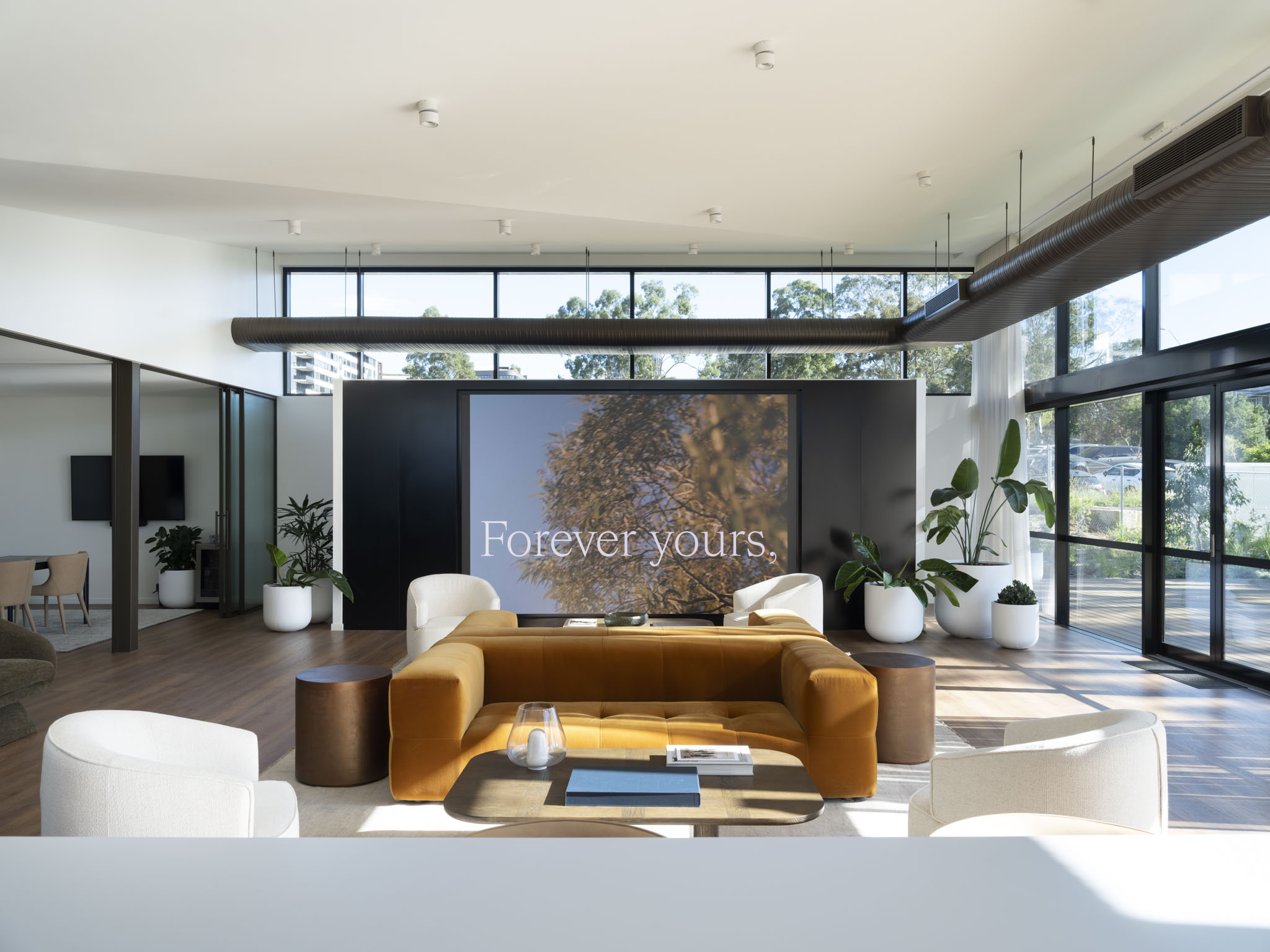
These gabion walls form a cocoon-like envelope, designed to be dismantled and reused, reinforcing principles of circular design. Generous windows break through the solidity of the façade, framing views of the evolving master plan and future parklands. A central internal garden forms the building’s spatial anchor, offering a moment of quiet reflection while also organising circulation—mirroring the role of Central Park within Melrose Park. Operable walls and strong landscape connections allow nature to permeate the interior, blurring boundaries between indoors and out, as a clear intention of future living at Melrose Park. More than a showroom, the structure serves as a living demonstration of regenerative, adaptable design—light in footprint, respectful of place, and intended to one day disappear, making way for the next chapter in the site’s transformation.